
 ONLINE VAPE STORE UK.
FREE DELIVERY OVER £40
- SAME DAY DISPATCH - ORDER BY 4PM
ONLINE VAPE STORE UK.
FREE DELIVERY OVER £40
- SAME DAY DISPATCH - ORDER BY 4PM
 01772 230513
UK Vaping Laws 2026 Guide
Stay updated with the UK vaping laws for 2026. Learn about disposable vape bans, product regulations, age restrictions, and compliance rules.

There have been a number of changes to UK vaping laws in 2026, including new laws and regulations that affect both individual vapers and businesses selling vaping products throughout the country. Below are the most significant changes and their implications for using and purchasing vaping products in the UK, as well as the existing vaping regulations that continue to apply to vapers in 2026.
Along with the already established restrictions, vapers should be aware of the future changes, such as the introduction of the Vaping Products Duty, stamps for e-liquids, future vaping advertising restrictions, and future regulations of vaping flavours. These changes can affect the choice of vapers, but at the moment, there is no need to worry about future vaping laws, as the article gives an overview of the current vaping laws in 2026.
Featured Products




Table of Contents
UK Vaping Laws 2026: The Latest Rules Every User Should Know
If you vape in the UK - or you're thinking about starting - 2026 is arguably the most important year to pay attention. In the space of just twelve months, the legal landscape has shifted more dramatically than at any point since vaping regulation began. A landmark new law has received Royal Assent, disposable vapes have already been pulled from shelves, and a brand-new tax on e-liquid is looming on the horizon. That's before you even get into the consultations on indoor vaping, outdoor restrictions, and flavour rules that are still working their way through the system.
It's a lot to take in. So rather than wade through dozens of government documents and press releases, this guide pulls everything together in one place - what's already law, what's changing soon, and what's still being debated.
The Foundation: What the TRPR Actually Means for You
Before diving into the new stuff, it's worth understanding the bedrock of UK vaping law, because it still underpins everything else.
The Tobacco and Related Products Regulations 2016 (TRPR) is the foundation of UK vaping law. It came into force on 20 May 2016 as the UK's implementation of the EU Tobacco Products Directive (TPD) and was retained in UK law after Brexit. In practice, what does that mean for the average vaper?
In practice, TRPR means nicotine e-liquid can only be sold in 10ml bottles. Pods and tanks are capped at 2ml. Nicotine tops out at 20mg/ml. Packaging must include health warnings, ingredient lists, and child-resistant closures. Every product on sale legally in the UK must also be registered with the Medicines and Healthcare products Regulatory Agency (MHRA) before it hits the shelves.
These rules haven't dramatically changed since 2017, but they're the reason you won't find 50ml bottles of nicotine-laden e-liquid on the high street, and why that pod kit you bought holds less liquid than you might prefer. They exist, and they work - the market is far more standardised and safer than it was in the early days.
One important note for anyone buying nicotine-free products: nicotine-free e-liquids and devices are not covered by the TRPR's nicotine-specific rules. There is no legal limit on tank size or bottle size for 0mg products. General product safety law still applies, but you have more flexibility if you've already stepped down to zero-nicotine vaping.
The Biggest Change Already in Force: The Disposable Vape Ban
This one is done and dusted, though some people are still catching up.
Disposable vapes were banned across the UK on 1 June 2025. Since that date, single-use vapes are illegal to sell. The ban came through separate environmental regulations before being formally incorporated into the wider legislative framework. Scotland, Wales and Northern Ireland enacted equivalent legislation on the same date, so the ban applies uniformly across all four nations.
The reasoning behind the ban was twofold: environmental concern over billions of single-use plastic and lithium battery devices ending up in landfill, and a more pressing public health concern that disposables had become the primary entry point for young people into vaping. Youth vaping had seen an alarming spike between 2021 and 2024, and disposables were providing exactly the ammunition regulators were looking for.
If you're still seeing single-use disposables on shelves somewhere, that's illegal. You can report suspected non-compliant sales to your local Trading Standards authority.
So What's Still Legal?
Quite a lot, as it turns out. Refillable vape kits and prefilled pod kits with swappable pods are still legal. The brands that dominated the disposable market - Elf Bar, Lost Mary, SKE - have largely pivoted to rechargeable versions with replaceable pods, offering the same flavours and similar experience without the single-use element.
For most longer-term vapers, refillable pod kits and open-system devices remain the preferred choice. They're cheaper to run, offer more flexibility, and aren't tied to one manufacturer's pod ecosystem. The disposable ban changed where people start their vaping journey; it didn't restrict what experienced vapers could buy.
The Tobacco and Vapes Act 2026: What It Actually Does
This is the headline legislation of the year. The Tobacco and Vapes Bill received Royal Assent on 29 April 2026, becoming the Tobacco and Vapes Act 2026. Health Secretary Wes Streeting described it as "a turning point for the nation's health."
The Act makes it illegal to sell tobacco products to anyone born on or after 1 January 2009, aiming to create a smoke-free generation. The age restriction on tobacco sales takes effect from 1 January 2027, meaning it isn't yet in force - but the legal groundwork is laid.
For vapers specifically, the Act's implications are more nuanced. It doesn't ban vaping. It doesn't restrict the products currently on sale. What it does is give the government new powers and frameworks that will shape vaping regulation in the coming years.
What the Act Does Right Now
Certain administrative and enabling provisions became active immediately on Royal Assent (29 April 2026). The formalisation of the disposable ban within the wider legislative framework is one example.
The advertising and sponsorship ban has a confirmed commencement date of 1 June 2027. It isn't in force yet, but the clock is ticking. When it arrives, vape advertising will face the same restrictions as tobacco.
What the Act Enables But Hasn't Yet Activated
This is where it gets more complex. The provisions still needing secondary legislation include flavour restrictions, packaging controls, point-of-sale display rules, and a retail licensing scheme. None of these is active yet. Each requires a formal consultation, a draft statutory instrument, and a commencement order before becoming law.
On flavours specifically - a topic that's generated considerable anxiety among vapers - if flavour restrictions take effect in future, they would most likely target child-appeal naming conventions rather than ban entire flavour categories, based on the direction of the Act. No restrictions have been confirmed. Fruit, dessert, and menthol e-liquids remain fully legal today.
The retail licensing scheme is also worth noting. The Act introduces stronger enforcement powers, including the ability to implement a retail licensing scheme and tackle illicit tobacco and vape sales. This will eventually mean vape shops need a licence to operate, similar to alcohol licensing - but again, the secondary legislation hasn't been written yet.
The October 2026 Vape Tax: What You Need to Know
This is the change that will hit vapers' wallets most directly, and it's coming sooner than most people realise.
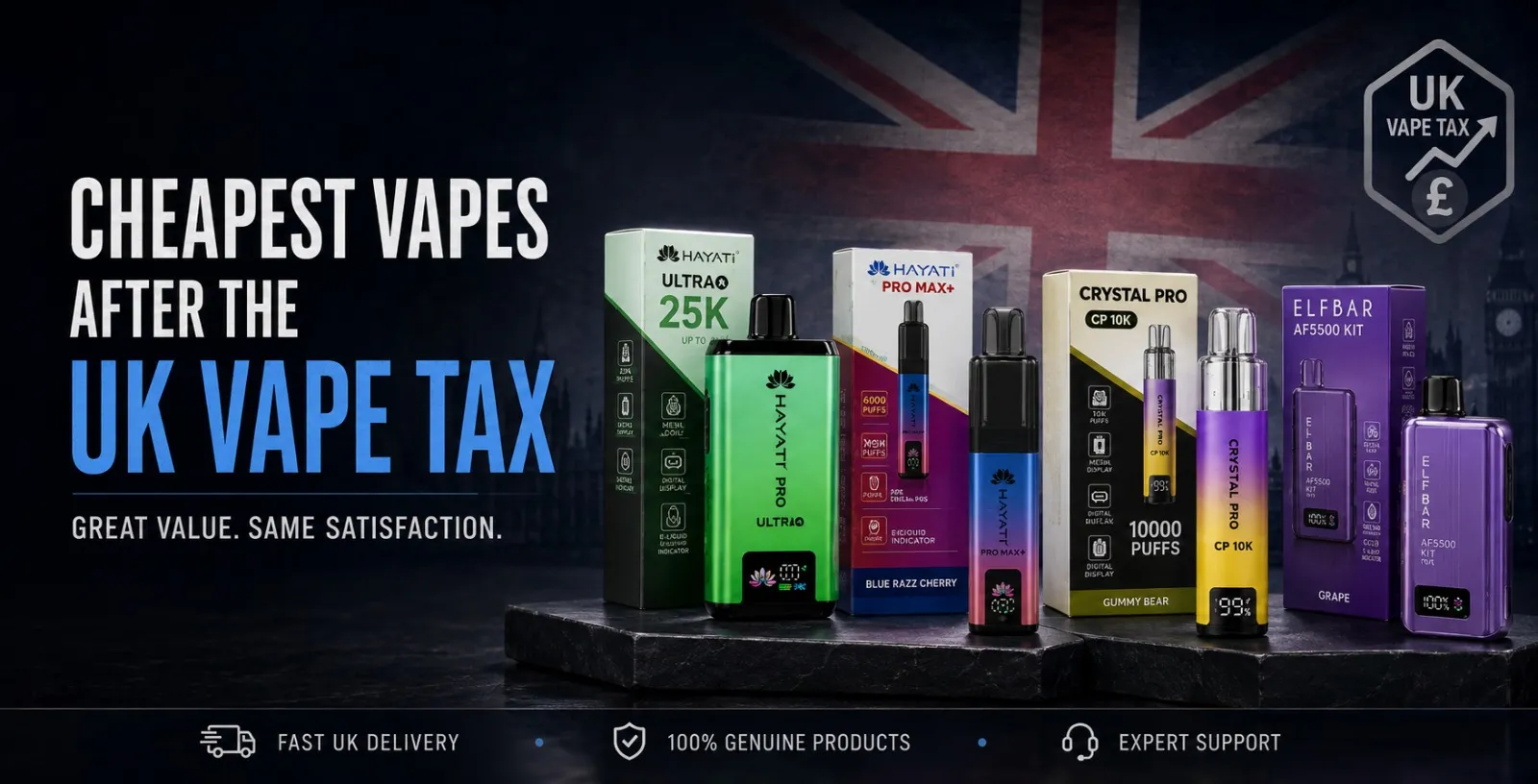
From 1 October 2026, a new Vaping Products Duty adds £2.20 per 10ml to all e-liquids - including nic salts, shortfills, nicotine shots, and prefilled pods. VAT is applied on top, bringing the real-terms increase to around £2.64 per 10ml.
To put that in concrete terms: if you're used to picking up a 10ml bottle for around £1, expect that same bottle to cost closer to £3.20 after October. That's a significant jump for regular vapers, particularly those who go through a bottle or two a week.
Hardware is not subject to the Vaping Products Duty. The tax applies to e-liquid only, so your device, coils, and pods (when sold separately from liquid) won't be affected. Nicotine-free e-liquids are still taxed under the new duty - it applies to all vaping liquids regardless of nicotine content.
From 1 October 2026, all qualifying products sold will need to carry duty stamps on their packaging - similar to how alcohol and tobacco products work - to show that the tax has been paid. For consumers, this means you'll eventually be able to verify that a product is legitimately duty-paid by checking for the stamp, which should also help identify counterfeit or illegally imported products.
It's worth keeping some perspective here. Even with the new tax, vaping remains considerably cheaper than smoking. A 20-a-day smoker spending upwards of £15 daily on cigarettes will still save substantially by switching, even after October's price increases.
Age Restrictions: The Rules That Haven't Changed (But Are Getting Stricter Enforcement)
The minimum legal age to purchase vaping products in the UK is 18. This applies across England, Scotland, Wales and Northern Ireland.
Retailers who sell vapes to anyone under 18 face a fine of up to £2,500. Proxy purchasing - buying a vape on behalf of someone under 18 - is a separate offence carrying the same penalty.
Online retailers must carry out age verification at checkout, the same 18+ requirement that applies in physical shops. In physical stores, Challenge 25 policies are standard practice - if you look under 25, you'll be asked for ID. Don't be offended; it's the retailer doing their job properly.
What's changing is the enforcement framework. The Tobacco and Vapes Act introduces a national licensing scheme and expanded powers for trading standards officers, which means repeat offenders will find it much harder to continue operating.
Where Can You Vape? Public Spaces, Indoors, and Driving
This is one of the most commonly misunderstood areas of UK vaping law, largely because the rules are more fragmented than people expect.
Indoors
There is no national law banning indoor vaping in the UK. Unlike cigarette smoking, there is no blanket indoor vaping ban. Individual venues - workplaces, restaurants, transport operators - can and often do ban vaping on their premises. Most pubs, restaurants, shopping centres, and public transport operators have their own policies, and the overwhelming majority don't allow vaping indoors. But that's their choice, not a legal requirement imposed on them.
This could change. A government consultation on vape-free places ran from 13 February to 8 May 2026. The consultation covered indoor public places, schools, playgrounds, outdoor areas of hospitals, and education settings. Pub gardens and open public spaces were excluded from the proposals. The consultation has closed, and the government's response is pending. No new indoor vaping rules are in force as a result of that consultation yet - any changes would require further legislation before taking effect.
Outdoors
No national law prohibits vaping outdoors. Some local councils have introduced restrictions near school entrances and in children's play areas, but these vary by location. Once the Tobacco and Vapes Act's outdoor provisions are enacted through secondary legislation, there will be vape-free zones around hospitals and schools - but again, this isn't yet in force.
Driving
There is no specific law against vaping while driving in the UK. However, if vaping impairs your driving - for example, by creating excessive vapour that obscures your vision - you could be charged with driving without due care and attention. The sensible approach is to avoid it altogether, particularly in stop-start traffic where a cloud of vapour obscuring your windscreen could cause a serious incident.
Buying vapes online: Is it legal, and What Are the Rules?
Buying vapes online in the UK is legal as long as the retailer verifies your age and the products meet TRPR standards. The same product rules apply whether you're buying in a physical shop or through a website - compliant products, age verification at checkout, and correct MHRA-notified products only.
Television, radio, and most online advertising channels are restricted, particularly where nicotine-containing products are involved. What retailers can do is display products on their websites with factual information, list ingredients, and describe usage. What they cannot do is run paid social media campaigns, influencer promotions targeting younger audiences, or lifestyle advertising that frames vaping as glamorous.
Advertising: What's Restricted Now and What's Coming
Current advertising rules are already fairly strict. The aim is to prevent marketing that could appeal to non-smokers or young people.
When the advertising ban built into the Tobacco and Vapes Act comes into force in June 2027, vape advertising will be treated much like tobacco advertising - banned from most channels entirely. The detail of exactly what that looks like in practice will emerge through guidance and secondary legislation over the coming year.
What About Illicit Vapes?
This deserves a mention because the illicit market has grown considerably in the wake of the disposable ban and will likely respond to the October 2026 tax increase.
If you're buying products through unofficial channels - grey market websites, market stalls, unverified social media sellers - you have no guarantee that those products comply with nicotine limits, safety standards, or MHRA registration requirements. Several investigations have found counterfeit products with nicotine concentrations far exceeding the 20mg/ml legal limit, as well as banned substances in some cases.
The duty stamp scheme launching in October is partly designed to address this. If a product doesn't carry a valid duty stamp, it hasn't gone through legitimate channels. Report suspected illegal products to Trading Standards via the Citizens Advice consumer helpline: 0808 223 1133.
Summary: Where Things Stand Right Now
To bring it all together, here's a clear picture of what applies today versus what's still coming:
In force now:
- Disposable vapes banned (since 1 June 2025)
- Minimum age 18, with £2,500 fines for underage sales
- TRPR product rules: 20mg/ml nicotine cap, 2ml tanks, 10ml bottles
- MHRA registration required for all products
- Tobacco and Vapes Act received Royal Assent (29 April 2026)
- The tobacco age restriction for those born after 1 January 2009 becomes enforceable from 1 January 2027
Confirmed and coming soon:
- Vaping Products Duty of £2.20 per 10ml (1 October 2026)
- Duty stamps required on all e-liquid packaging (1 October 2026)
- Vape advertising and sponsorship ban (1 June 2027)
Powers granted but not yet activated (require secondary legislation):
- Flavour and ingredient restrictions
- Packaging and branding controls
- Point-of-sale display rules
- Retail licensing scheme
Conclusion
UK vaping law in 2026 is in genuine transition. The foundations are solid and haven't dramatically changed - the same product standards that have governed the market since 2017 remain in place. But the Tobacco and Vapes Act has opened the door to a new era of regulation, one where the government holds considerably more power over what vaping products look like, how they're sold, and where they can be used.
For the average adult vaper, the immediate practical impacts are clear: disposables are gone, prices are rising in October, and it's worth keeping an eye on the indoor vaping consultation response when it eventually comes. For retailers, the licensing scheme and advertising restrictions will require meaningful operational changes in the months ahead.
None of this amounts to a vaping ban. The UK government has consistently stated that vaping should remain accessible to adult smokers seeking to quit tobacco. The regulatory direction is about protecting young people from taking up nicotine, not about removing the tool from those who use it to stay off cigarettes.
Stay informed, buy from legitimate retailers, and check back as the secondary legislation and consultation responses begin to emerge - because this particular story is far from over.
Why Trust Ninja Vapes UK?
Lowest Price Guaranteed
Your savings, our promise.
5% Cashback on Orders
Earn rewards with every purchase.
Trusted by customers.
Free delivery over £40
Shop more, save more











0 Replies